Explained
Contact lens problems: from dry eyes to true warning signs
Last updated: 20 August 2026
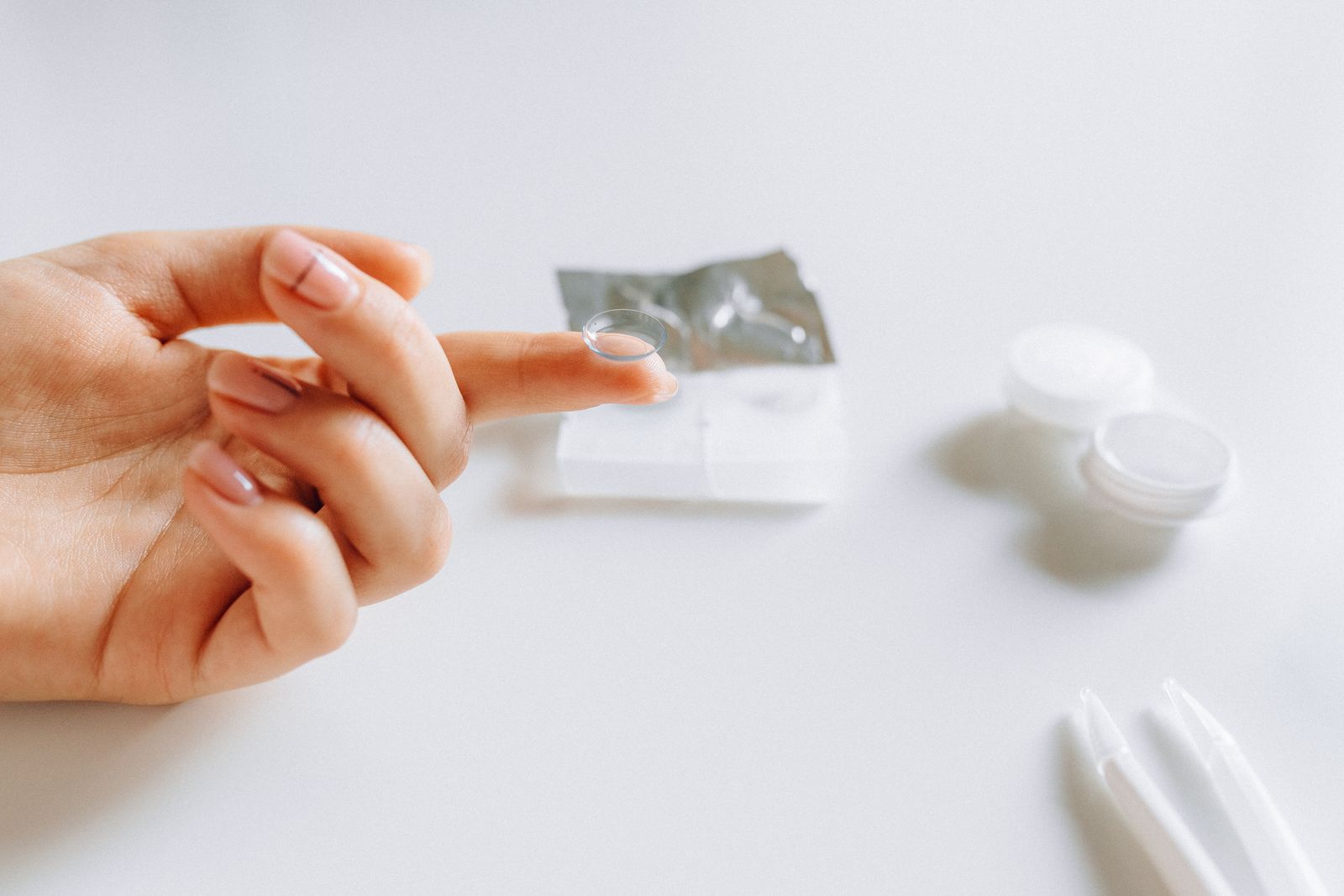
Millions of people wear contact lenses daily, mostly without trouble. But nearly every wearer knows the off days: burning eyes at five in the afternoon, a lens that 'floats', blurry moments. The vast majority of that is harmless and fixable — and one scenario emphatically is not. This article helps you tell the difference.
In short
- Most lens complaints stem from dryness, overlong wear, deposits or a mediocre fit — bothersome, not dangerous.
- The golden rule with complaints: lens out, and back in only when the eye is quiet.
- Red flags: a red painful eye, light sensitivity or reduced vision — lens out and same-day assessment (corneal infection risk).
- Sleeping, showering and swimming in lenses, and water near lenses: the four habits behind most misery.
⚠ Acute symptoms?Sudden vision loss, an eye injury, chemicals in the eye, severe pain, or new blind spots in your visual field? Don't wait for an online explanation — call your GP (huisarts), the out-of-hours GP service, or 112 immediately.
The ordinary complaints — and their fixes
Dryness is complaint number one: eyes turning gritty, tired or red as the day progresses. Lenses inevitably disturb the tear film, especially with screen work (less blinking) and air conditioning. Directions for fixing it: lens-compatible artificial tears, shorter wearing times, a material that holds moisture better, or switching to daily disposables. If you have structurally dry eyes, read our article on that — improving the tear film helps the lens too.
Blur that improves on blinking fits a dry or dirty lens; blur appearing after removing the lens can accompany prolonged corneal oxygen shortage — a reason to discuss wearing times and lens type. A lens that shifts or 'floats' points to fit or dryness. And itching with mucus strands, especially in spring: think allergy, where deposits on the lens amplify the trigger; dailies are often the best move.
The four habits your cornea won't forgive
Nearly all serious lens problems trace back to a short list of habits. Sleeping in lenses not made for it: the cornea already receives little oxygen at night; with a lens it becomes too little, and infection risk rises sharply. Mixing water and lenses: tap water, pool water and even shower water can harbour the amoeba Acanthamoeba — rare, but notorious for stubborn corneal infections. So never rinse lenses with water, don't swim or shower in them (or wear goggles and discard dailies afterwards). Stretching lenses and solution: a monthly is not a six-weekly, and 'topping up' solution instead of replacing it is a classic. And the lens case: replace monthly, air-dry, never rinse with water.
The alarm scenario: the red, painful eye
One picture always justifies same-day action: a red eye that hurts (true pain, not just irritation), tolerates bright light poorly or sees blurrier — with or without a white dot on the cornea. That can be a corneal infection (keratitis), which can move fast in lens wearers. The rules: lens out immediately, none back in, keep the lens and case (for possible testing), and same-day contact with a GP, optometrist or ophthalmologist. Better five times too early than once too late — early treatment is what makes the difference in keratitis.
Power differences between glasses and lenses
Finally, a frequent question: why does your lens power differ from your glasses power? Glasses sit over a centimetre from the eye; a lens sits on it. From roughly ±4 dioptres that distance genuinely matters optically (vertex correction): a -5.00 spectacle becomes, say, a -4.75 lens, and with plus powers it works the other way. If the difference on your fitting note follows this logic, nothing odd is going on.
Frequently asked questions
May I occasionally sleep in my dailies?
No — unless your lens is explicitly approved for overnight wear and your fitter has agreed. One accidental night usually passes without harm (lens out, rest the eye), but don't make it a habit: infection risk climbs with every night.
My lens got 'lost' in my eye. Can it slip behind my eye?
No — anatomically impossible: the conjunctiva forms a closed pocket. The lens is almost always folded under the upper lid. Add some artificial tears, look far down and massage gently over the lid; if you can't retrieve it, an optometrist will fish it out in no time.
How many hours a day may I wear lenses?
It varies with lens type, eye and tear film; a common guideline is 10–12 hours, less with dryness complaints. Routinely wearing them 'until they won't go anymore' signals a mismatched lens or pattern — raise it at your check-up.
Are monthlies worse than dailies?
Not by definition, but dailies win on hygiene: a sterile lens every day, no solution, no case. With allergy, dryness or past infections they are often the safest choice. Monthlies are fine for those who keep the care regimen strictly.
Sources and further reading
This article is general explanation, not medical advice about your situation. For acute symptoms: call your GP, the out-of-hours GP service, or 112.