Explained
Eye pressure 24: should I worry?
Last updated: 20 August 2026
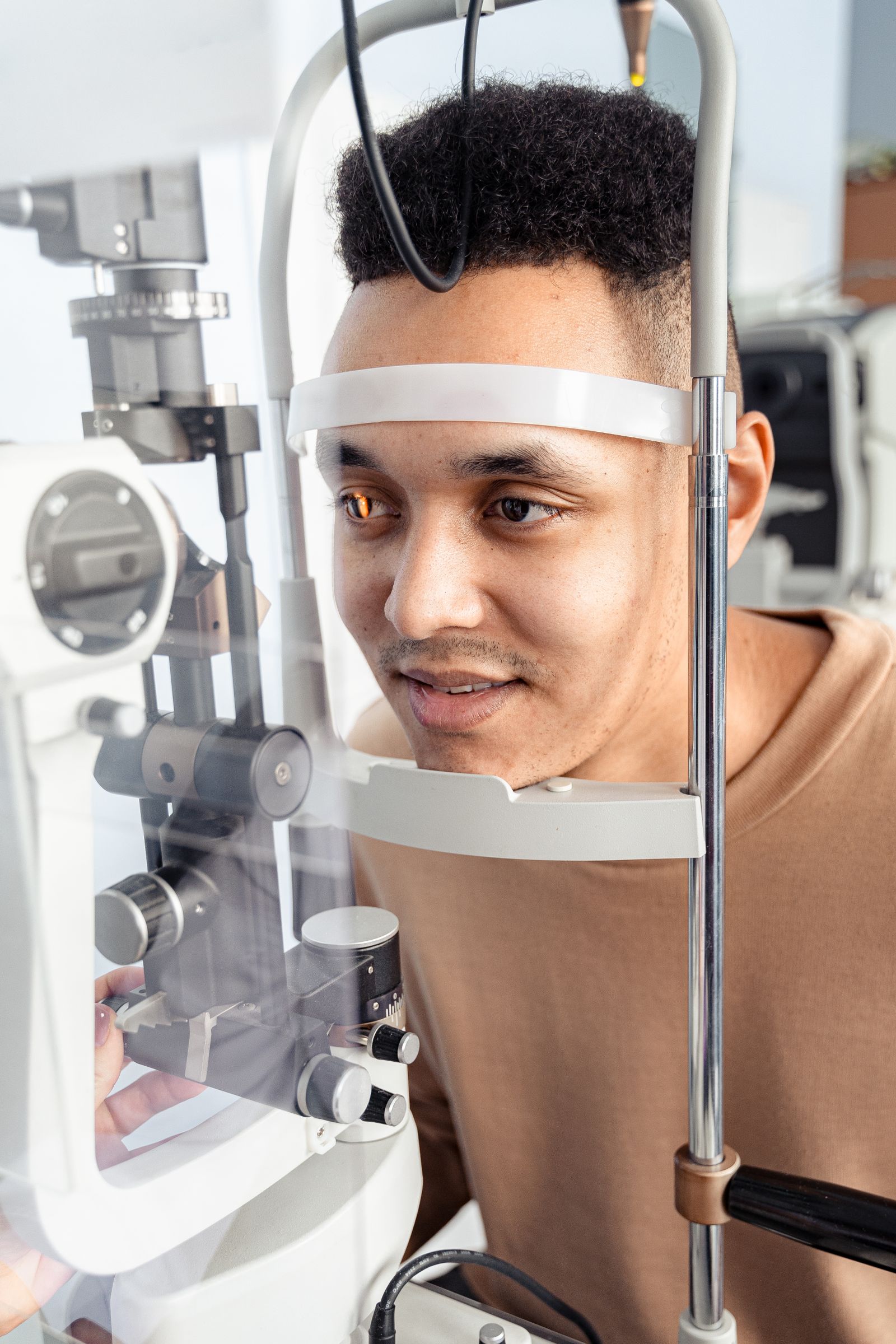
A measurement showed your eye pressure is 24. The short, honest answer: 24 mmHg is above the usual range, but a single reading doesn't make anyone a patient. What the number does mean — and what's sensible to do now — is below.
In short
- An eye pressure of 24 mmHg is higher than usual (10–21), but by itself not a diagnosis.
- Measurement method, time of day and your corneal thickness all influence the number.
- Sensible: a repeat measurement with corneal thickness, and where possible an OCT scan.
- Severe pain, a red eye or sudden blur: call your GP or the out-of-hours service immediately.
⚠ Acute symptoms?Sudden vision loss, an eye injury, chemicals in the eye, severe pain, or new blind spots in your visual field? Don't wait for an online explanation — call your GP (huisarts), the out-of-hours GP service, or 112 immediately.
What is eye pressure, actually?
Your eye continuously produces fluid (aqueous humour) that also drains away. The balance between production and drainage determines the pressure inside the eye, measured in millimetres of mercury (mmHg). For most people that pressure sits somewhere between 10 and 21 mmHg — a statistical range, not a sharp line between healthy and ill.
Why is 21 not a magic threshold?
A pressure of 24 falls above the usual range, and that's a reason for a proper follow-up measurement — not for panic. Some people live with a pressure of 24 and never develop eye damage, while glaucoma also exists at pressures that look perfectly 'normal' (normal-tension glaucoma). The number is a risk factor, not a diagnosis.
The measurement itself is also less absolute than it seems. Eye pressure fluctuates through the day. Method matters: an air-puff reading at the optician measures differently from the contact measurement at an ophthalmologist. And your corneal thickness influences the result: a thicker cornea tends to overestimate pressure, a thinner one to underestimate it. That's why an elevated reading should really always be paired with a corneal thickness measurement (pachymetry).
Is elevated pressure the same as glaucoma?
No. Glaucoma is damage to the optic nerve, usually — but not always — combined with elevated eye pressure. Elevated pressure without damage is called ocular hypertension; many people with ocular hypertension never develop glaucoma, though regular monitoring is wise.
Whether something is actually wrong doesn't follow from the pressure number but from further testing: a repeat measurement at a different time of day, pachymetry, an OCT scan of the nerve fibre layer, assessment of the optic nerve and possibly a visual field test.
What's sensible now?
Book a repeat measurement with an optometrist or an optician with measuring equipment, and explicitly ask about your corneal thickness and — where available — an OCT of the nerve fibre layer. Bring earlier measurements if you have them: the trend over time says more than one snapshot.
One important exception: a much higher pressure with pain, a red eye, blurred vision, halos around lights or nausea can point to an acute angle-closure attack. That is an emergency — call your GP or the out-of-hours GP service immediately.
Frequently asked questions
Can I lower my eye pressure myself?
Lifestyle has only limited influence on eye pressure. Regular exercise seems to help somewhat; smoking and very large amounts of caffeine work against you. Never start drops or remedies on your own — pressure-lowering treatment belongs with an ophthalmologist, after a diagnosis.
Is elevated eye pressure hereditary?
Glaucoma runs in families. If a parent or sibling has glaucoma, your own risk is elevated and periodic checks from around age forty onwards are extra worthwhile.
How often should I have my eyes checked?
As a rule of thumb every one to two years, and more often if your pressure was elevated before, glaucoma runs in your family, you are highly near-sighted, or your ophthalmologist advises it. Your optometrist can set a personal interval.
Sources and further reading
This article is general explanation, not medical advice about your situation. For acute symptoms: call your GP, the out-of-hours GP service, or 112.