Explained
Strabismus and lazy eye: why the first years of life count
Last updated: 20 August 2026
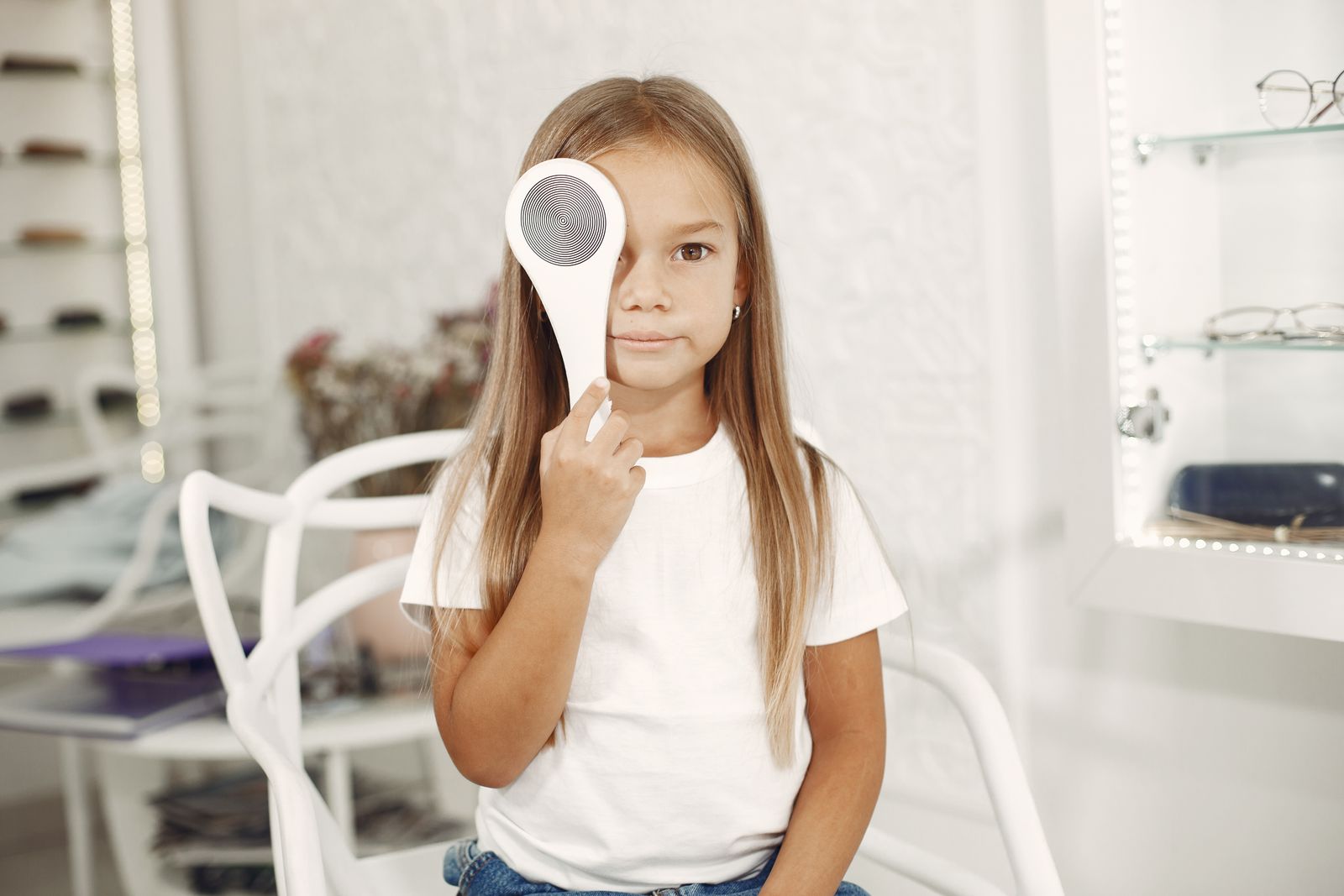
A little eye drifting on a baby photo, a child not passing the preschool screening: squint and lazy eye rank among the most important treatable eye problems of childhood. The stakes are high — one eye's vision for the rest of a life — and the treatment is surprisingly low-tech. Timing is everything.
In short
- In strabismus (squint) the eyes do not aim at the same point; the brain then often suppresses one eye's image.
- If the brain structurally suppresses that image in the first years of life, that eye never learns to see sharply: a lazy eye (amblyopia).
- An unnoticed power difference between the eyes can cause a lazy eye without any visible squint.
- Treatment (glasses, patching) works best before about age seven — hence the standard child health screenings.
⚠ Acute symptoms?Sudden vision loss, an eye injury, chemicals in the eye, severe pain, or new blind spots in your visual field? Don't wait for an online explanation — call your GP (huisarts), the out-of-hours GP service, or 112 immediately.
How are squint and lazy eye connected?
Seeing happens in your brain. It fuses the images of both eyes into one three-dimensional picture — but only if both eyes aim at the same point and see about equally sharply. If one eye is misaligned, the brain receives two different images. An adult brain responds with double vision; a child's brain is smarter and more radical: it simply switches the disturbing image off.
That suppression is an emergency fix with a price. The development of sharp vision is a learning process of the first years of life that needs input. An eye whose image is structurally suppressed never develops that sharpness — it becomes 'lazy' (amblyopic). Nothing is wrong with the eye itself; the connection in the brain has remained underdeveloped.
Also without a visible squint
Here lies the trap: a lazy eye also develops when both eyes are straight but one sees much worse, for instance through an unnoticed power difference (one eye +1, the other +4). The child does not complain — it sees fine with the good eye — and nothing shows on the outside. That is exactly why standard child health eye checks exist: they catch the invisible cases. Do not skip those appointments, even when nothing seems wrong.
Signals for parents
Beyond the screenings there are signals that justify an appointment of your own: an eye still drifting regularly after four to six months of age (occasional wandering is normal in the first months), misalignment recurring on photos or a light reflection sitting in different spots in the two eyes, a head held systematically tilted or turned when looking attentively, or squeezing one eye shut in bright light. And at any age: a suddenly appearing squint or double vision warrants prompt assessment.
How is it treated?
Treatment follows logical steps. First the glasses: much childhood squint stems from uncorrected farsightedness, and fitting glasses rebalances the interplay between focusing and eye alignment — sometimes the squint resolves with that alone. Then putting the lazy eye to work: patching the good eye a few hours a day (or blurring it with atropine drops) forces the brain to use the weak eye and learn sharpness after all. Patching is not punishment but training — and it demonstrably works, provided it is kept up.
Eye muscle surgery can correct the alignment when glasses and training do not resolve the deviation. Important to know: surgery straightens the eyes (important for cooperation and self-image), but does not cure a lazy eye — that remains the work of glasses and patching.
And adults?
The sensitive learning window largely closes around age seven to eight; an adult lazy eye cannot be 'trained awake' afterwards, though research continues. What always remains possible: surgically correcting a deviation (also purely for appearance and social contact — a legitimate reason), prisms in glasses against double vision, and good protection of the better eye. Anyone with one weak eye is wise to cherish the good one: sports glasses where fitting, and never wait-and-see with complaints in the good eye.
Frequently asked questions
My three-month-old sometimes crosses their eyes briefly. Is that bad?
In the first four to six months occasional drifting is normal: eye teamwork is still under construction. If it continues beyond that, becomes more frequent, or the eye is constantly turned — have it examined.
How many hours a day must an eye be patched?
The orthoptist decides based on age and the depth of the amblyopia — often a few hours a day, sometimes more. More important than the exact number is the faithfulness of doing it; the result stands or falls with that.
Can a lazy eye come back after successful treatment?
Yes, until about age eight vision can slip back. That is why treatment is tapered rather than stopped abruptly, and check-ups continue for a while.
I am an adult and have seen poorly with one eye since childhood. Are new glasses worthwhile?
A proper prescription extracts whatever is in there — which may be more or less, depending on the depth of the amblyopia. An honest measurement brings clarity, and double vision or a bothersome eye position remain treatable in adulthood.
Sources and further reading
This article is general explanation, not medical advice about your situation. For acute symptoms: call your GP, the out-of-hours GP service, or 112.